Fruit bushes – be inspired by nature’s selection


Fruit bushes – be inspired by nature’s selection
Fruit bushes are a fantastic way to bring both beauty and functionality to the garden. They not only provide delicious berries and fruits but also attract bees, butterflies and birds that contribute to a healthy garden ecosystem. Whether you have a large garden or a small terrace – there are fruit bushes that suit your needs and climate.
In this article, you’ll get an overview of what to consider when choosing fruit bushes, as well as inspiration on different types and brands that can help you create your own edible oasis.
The article presents a wide selection of fruit bushes from various manufacturers and retailers. The aim is to provide an overview of the diversity of species, growth forms and uses, so that you can more easily find the bushes that suit your garden. The product information is based on publicly available descriptions and has been summarised to provide a clear and informative picture of what’s on offer.
Factors to consider when buying a fruit bush
When choosing fruit bushes for the garden, there are several practical and aesthetic factors you should consider.
1. Climate and soil
Most fruit bushes thrive best in sun and well-drained soil, but some species are more resilient than others. Always check whether the bush suits your local climate and soil type. Ericaceous plants such as blueberries, for example, require acidic soil, while currants and blackcurrants prefer more neutral conditions.
2. Space and location
Consider how much space you have available. Some bushes spread quickly and need pruning, while others grow more compactly and are suitable for smaller gardens or containers. Make sure the bushes get enough light and air so they don’t become susceptible to disease.
3. Harvest time and yield
Fruit bushes ripen at different times. If you choose varieties with different harvest times, you can extend the season and enjoy fresh berries from early summer to autumn. Also consider how much you want to harvest – some varieties produce large quantities, while others are more decorative.
4. Care and maintenance
Most fruit bushes need pruning to maintain their shape and ensure a good yield. Some species should be pruned annually, while others only need thinning every few years. Watering and fertilising also play a role in healthy growth and fruiting.
5. Pollination
Some fruit bushes are self-pollinating, while others need a pollination partner to bear fruit. If you only have space for one bush, choose a variety that can self-pollinate.
Products in focus
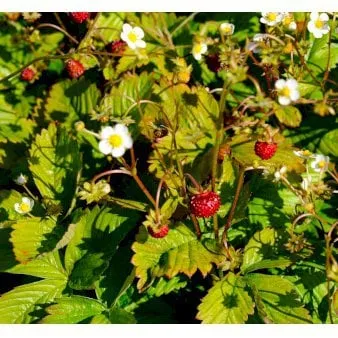
The wild strawberry (Fragaria vesca) is a perennial plant that grows low and forms dense clumps with runners that spread quickly and cover the ground. It thrives best in bright to partially shaded locations on moisture-retentive garden soil and requires little maintenance once established.
The plant grows about 10–20 cm tall and has green, serrated leaves. In May–June, it blooms with small white flowers that later develop into red, aromatic berries. Under favourable conditions, a second flowering and fruiting may occur in late summer.
The wild strawberry is suitable as ground cover in beds, under shrubs, or as a border plant in the vegetable garden. It is also a host plant for the butterfly Large Skipper, thus contributing to biodiversity in the garden.
- Low-growing ground cover: Forms dense clumps and spreads with runners.
- Edible berries: Small, red, and aromatic fruits in the summer months.
- Flowering: White flowers in May–June, with the possibility of another bloom later in the season.
- Location: Thrives in sun to partial shade on moisture-retentive soil.
- Native species: Contributes to a natural and insect-friendly garden environment.
Pros and cons
- Easy-care and undemanding plant
- Effectively covers the ground and suppresses weeds
- Produces edible berries
- Attracts pollinators and butterflies
- Can spread quickly and therefore requires some control in small beds
- The berries are small and ripen over an extended period
Pros and cons
Pros
- Easy-care and undemanding plant
- Effectively covers the ground and suppresses weeds
- Produces edible berries
- Attracts pollinators and butterflies
Cons
- Can spread quickly and therefore requires some control in small beds
- The berries are small and ripen over an extended period
Pros
- Easy-care and undemanding plant
- Effectively covers the ground and suppresses weeds
- Produces edible berries
- Attracts pollinators and butterflies
Cons
- Can spread quickly and therefore requires some control in small beds
- The berries are small and ripen over an extended period
Specifications
- Botanical name: Fragaria vesca
- Height: 10–20 cm
- Width: 20–40 cm
- Planting density: 7–9 plants per m²
- Plant spacing: approx. 30 cm
- Flowering period: May–June (possibly again later in summer)
- Flower colour: White
- Fruit colour: Red
- Leaf colour: Green
- Growth form: Ground-covering, clump-forming with runners
- Location: Sun / Partial shade
- Growing conditions: Moisture-retentive garden soil
- Winter hardiness: Fully hardy
- Use: Ground cover, border plant, container
- Ripening period: June–August
Product descriptions
The wild strawberry (Fragaria vesca) is a perennial plant that grows low and forms dense clumps with runners that spread quickly and cover the ground. It thrives best in bright to partially shaded locations on moisture-retentive garden soil and requires little maintenance once established.
The plant grows about 10–20 cm tall and has green, serrated leaves. In May–June, it blooms with small white flowers that later develop into red, aromatic berries. Under favourable conditions, a second flowering and fruiting may occur in late summer.
The wild strawberry is suitable as ground cover in beds, under shrubs, or as a border plant in the vegetable garden. It is also a host plant for the butterfly Large Skipper, thus contributing to biodiversity in the garden.
- Low-growing ground cover: Forms dense clumps and spreads with runners.
- Edible berries: Small, red, and aromatic fruits in the summer months.
- Flowering: White flowers in May–June, with the possibility of another bloom later in the season.
- Location: Thrives in sun to partial shade on moisture-retentive soil.
- Native species: Contributes to a natural and insect-friendly garden environment.
Pros and cons
- Easy-care and undemanding plant
- Effectively covers the ground and suppresses weeds
- Produces edible berries
- Attracts pollinators and butterflies
- Can spread quickly and therefore requires some control in small beds
- The berries are small and ripen over an extended period
Pros and cons
Pros
- Easy-care and undemanding plant
- Effectively covers the ground and suppresses weeds
- Produces edible berries
- Attracts pollinators and butterflies
Cons
- Can spread quickly and therefore requires some control in small beds
- The berries are small and ripen over an extended period
Pros
- Easy-care and undemanding plant
- Effectively covers the ground and suppresses weeds
- Produces edible berries
- Attracts pollinators and butterflies
Cons
- Can spread quickly and therefore requires some control in small beds
- The berries are small and ripen over an extended period
Specifications
- Botanical name: Fragaria vesca
- Height: 10–20 cm
- Width: 20–40 cm
- Planting density: 7–9 plants per m²
- Plant spacing: approx. 30 cm
- Flowering period: May–June (possibly again later in summer)
- Flower colour: White
- Fruit colour: Red
- Leaf colour: Green
- Growth form: Ground-covering, clump-forming with runners
- Location: Sun / Partial shade
- Growing conditions: Moisture-retentive garden soil
- Winter hardiness: Fully hardy
- Use: Ground cover, border plant, container
- Ripening period: June–August
Different types of fruit bushes
There is a wide variety of fruit bushes that can bring both flavour and diversity to the garden. Here are some of the most popular types.
1. Berry bushes
Berry bushes such as red currants, blackcurrants, gooseberries and blueberries are classics in British gardens. They are easy to grow, produce abundant yields and can be used for everything – from fresh eating to preserving and baking. Many varieties can also be grown in large containers.
2. Exotic and new varieties
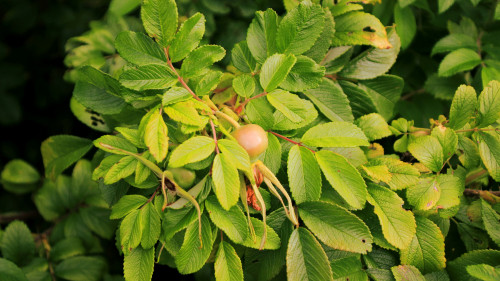
In recent years, shrubs such as chokeberry, sea buckthorn and Japanese wineberry have become popular. They have a high content of vitamins and antioxidants and give the garden a modern and exciting look. These varieties often need a bit more sun and space.
3. Ornamental shrubs with edible fruits
Shrubs such as chokeberries and ornamental cherries combine beautiful blossoms with edible fruits. They are ideal if you want a garden that is both decorative and functional.
4. Fruit bushes in containers
If you have a balcony or a small terrace, you can choose compact varieties such as blueberries, raspberries or blackberries that thrive in containers. They only need regular watering and feeding to produce a good yield.
Different brands of fruit bushes
The market for fruit bushes includes many manufacturers and nurseries, each with their own focus areas.
Jespers Planteskole
A Danish producer focusing on robust varieties that thrive in the Nordic climate. They offer a wide range of classic berry bushes and new varieties for large and small gardens.
Plantetorvet
Plantetorvet works with several nurseries and offers a large selection of fruit bushes. Here you’ll find both traditional varieties and rarer ones that can give your garden a unique touch.
Lundhede Planteskole
Lundhede is known for high quality and thorough advice. They offer fruit bushes in many sizes, so you can choose between young plants and already established bushes that produce quickly.
Bakker.com
An international brand focusing on simple gardening pleasure. They offer fruit bushes suitable for both beginners and experienced gardeners, often focusing on compact and self-pollinating varieties.
Bilka Havecenter
Bilka offers a wide selection of fruit bushes at reasonable prices. The range includes both classic Danish varieties and newer hybrids developed for stable yields under various conditions.
Frequently asked questions
When is the best time to plant fruit bushes?
The best time to plant fruit bushes is in spring or autumn, when the soil is moist and the temperatures are mild. This gives the plants the best conditions to establish themselves.
How much sun do fruit bushes need?
Most fruit bushes thrive best in full sun, but some varieties, such as red and blackcurrants, also tolerate partial shade. The more sun, the sweeter the fruits.
Do fruit bushes need to be pruned every year?
Yes, regular pruning is important to ensure good air circulation and fruiting. Remove old branches and shoots that grow inward to encourage new growth.
Can fruit bushes be grown in containers?
Yes, many varieties can be grown in large containers, especially compact types such as blueberries and dwarf raspberries. Ensure good drainage and use nutrient-rich soil.
How quickly do fruit bushes bear fruit?
Most fruit bushes start bearing fruit after 2–3 years, depending on the variety and growing conditions. Some bushes, such as raspberries, can, however, produce a small harvest in the first year.
Læs også: